It doesn’t take much for a place to capture my interest. In the case of Curaçao, it was a little cedilla: that miniature hook beneath the c which showed that it was meant to be pronounced like an s and not like a k, sandwiched between a scrabble of English letters unmarred by diacritics and accent marks. So piercingly novel and exotic, how did it get there?
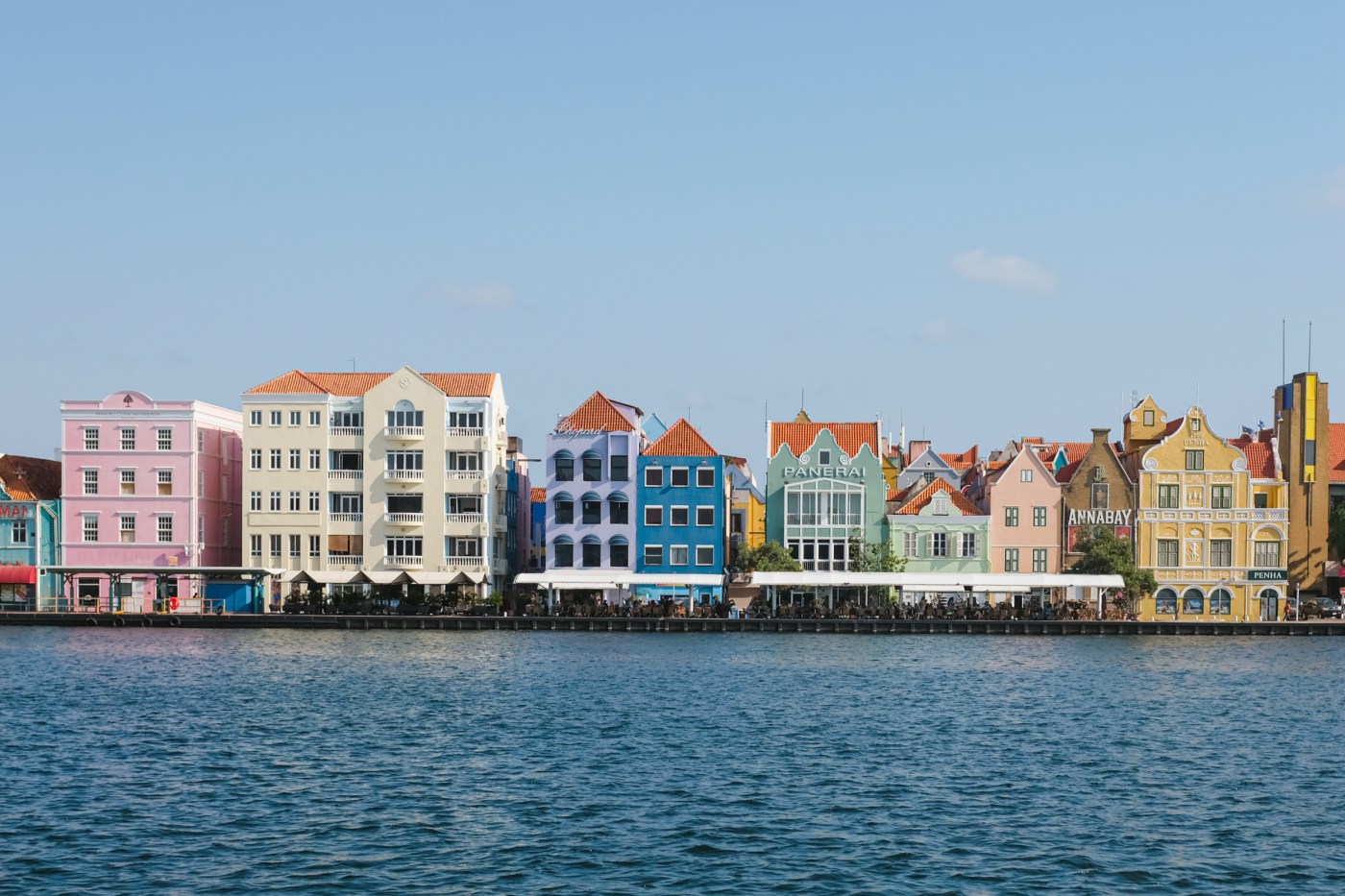
There is a popular belief that the name Curaçao is a portmanteau of two Portuguese words: curar, literally “to cure,” and coração, which means “heart.” And well, at first glance, the island’s jovial centrum looks like it could cure a heartache. Flanking both sides of the sun-drenched Sint Anna Bay, the carefree-colored colonial buildings of Willemstad leave no space for sadness of any shade.
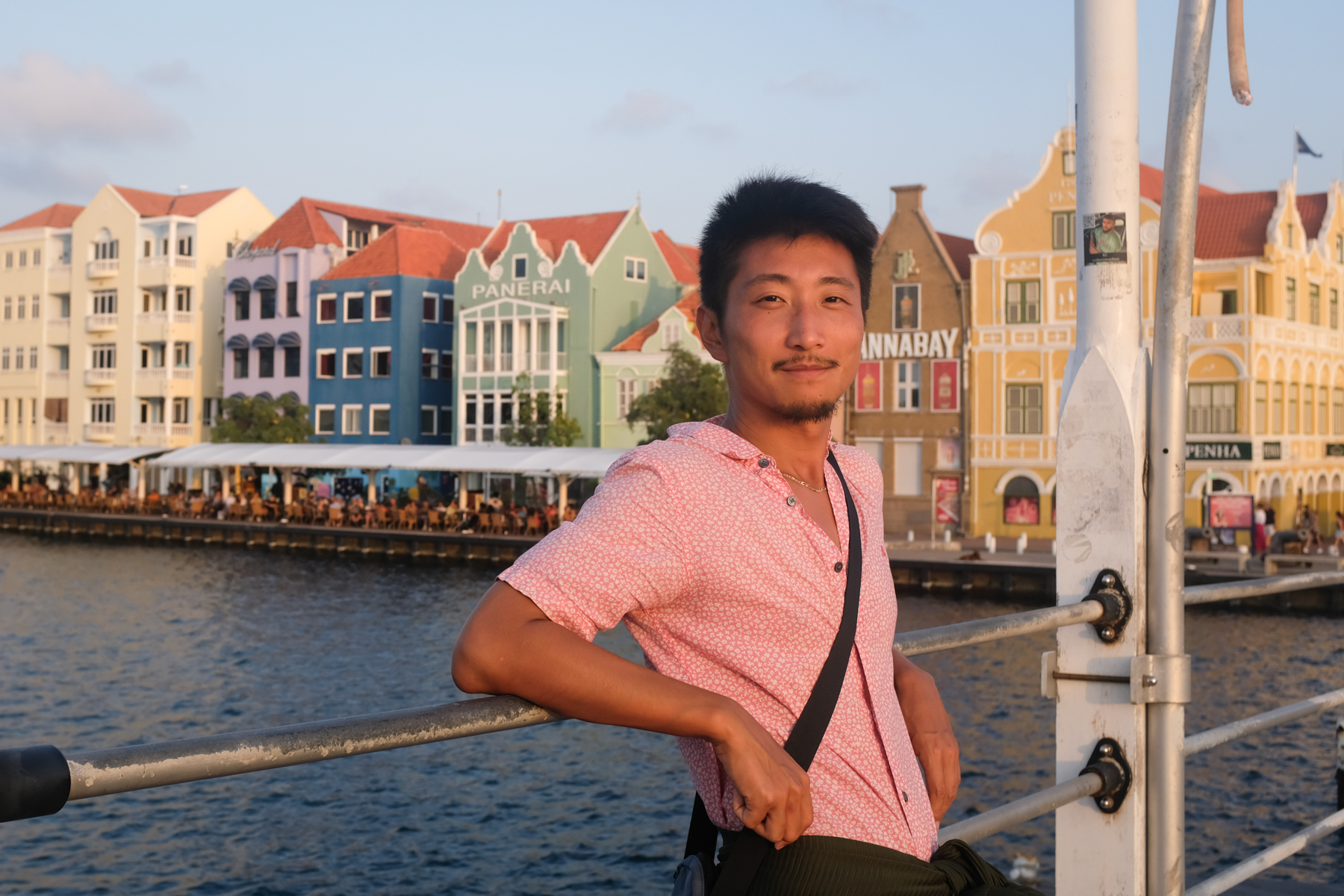
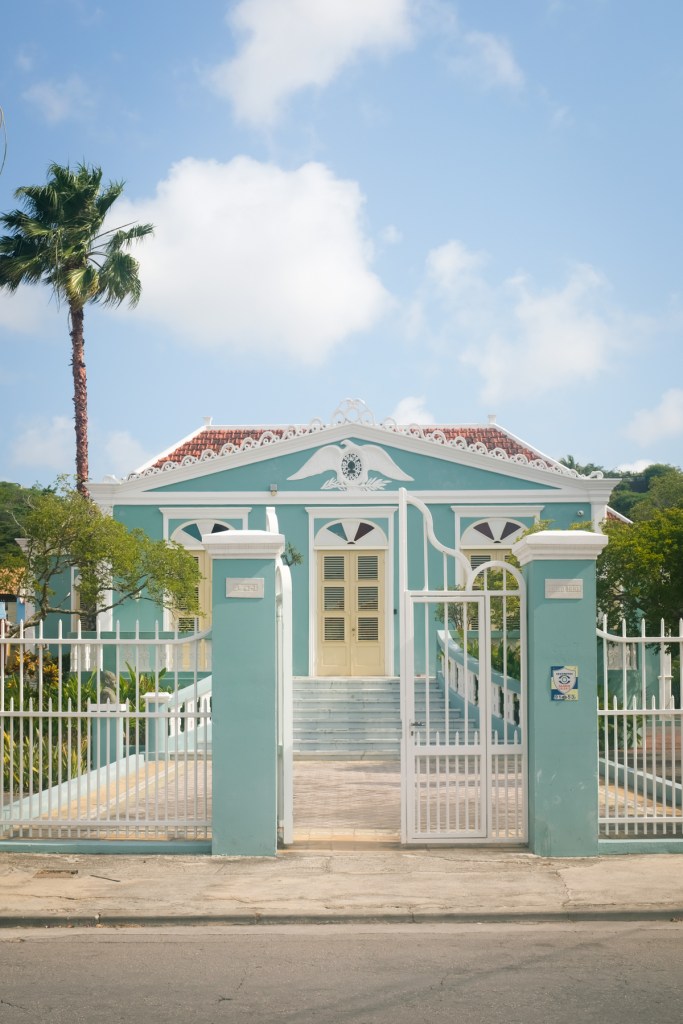
Along the waterfront strip of Willemstad’s oldest district, Punda, the buildings are slender and narrow. Some are embellished by fancy Flemish gables, graceful curves that stretch toward the skies. Identical to the canal houses of Amsterdam in all but their pastel coats of periwinkle, sky blue, celadon, and imperial yellow, they look as if the Dutch capital had accidentally swallowed its own supply of coffeeshop psychedelics. If Alice’s adventures were real, then Wonderland would have been in Willemstad.


At just 60 kilometers (or 40 miles) off the coast of Venezuela, Curaçao was once an extension of the former Spanish colony. In 1634, the island was invaded during the Dutch Revolt against Spain. More recently, it was a part of the Netherlands Antilles before the country’s dissolution in 2010. Today, along with the Netherlands, Aruba, and Sint Maarten, Curaçao is one of four constituent countries that make up the Kingdom of the Netherlands.

On the surface, many details of Curaçaoan life seem illogical, like a mosaic that doesn’t quite form any coherent picture. As a part of the Kingdom of the Netherlands, its residents are legally Dutch. But in lieu of the euro, the currency of the island is the little-known Antillean guilder (although that is set to soon be replaced by a new tender, the Caribbean guilder). On the streets of touristic Punda, Dutch is indubitably the most frequently used language. However, between themselves, the islanders speak Papiamentu—a creole rooted in colonial-era Portuguese and Spanish.


Papiamentu took hold in Curaçao after the Netherlands seized the island from Spain in 1634. Around the same time, Dutch fleets frequently invaded and captured Portuguese colonies around the world, such as Ceylon in Asia and Elmina in present-day Ghana—an important outpost in the transatlantic slave trade. The Dutch continued to bring Africans to the Caribbean, and the Afro-Portuguese creole spoken by these slaves eventually merged with the Spanish of the Venezuelan coast to become Papiamentu.

Across from Punda (a Papiamentu calque on the Dutch words de punt, or “the point”) on the other side of Sint Anna Bay is the district of Otrobanda. In the past, it was referred to as the Spanish side, and its name in creole literally means “the other bank.” Here, the Museum Kurá Hulanda sits in a 17th-century building situated over Curaçao’s original slave market. Apart from chronicling the transatlantic slave trade in detail, the museum offers a unique peek into the indigenous African cultures which became the progenitors of modern Caribbean societies. Within the halls of Kurá Hulanda are masks, fetishes, and sculptures from as far away as Mali and Burkina Faso.

Bon vivants will no doubt recognize Curaçao for its alcoholic namesake. With a vivid intensity that evokes tropical oceans and balmy skies, the blue curaçao cordial can been seen brightening cocktail bars around the world. Like the rest of the island, the liqueur is the result of a confluence of heterogenous elements. When the Spanish arrived on Curaçao, they carried with them the Seville orange with intentions to grow it on the island. While the trees did not thrive in the arid climate and were soon abandoned, the bitter fruit they bore gradually evolved into something entirely new: the laraha, or Curaçao orange. Only decades later was it discovered that the peels of this green citrus, when broken, produced an extraordinarily pleasant aroma. A Dutch distiller by the name of Lucas Bols brought laraha oil back to Amsterdam, where it was used to create an orange-flavored liqueur.

On Curaçao, Senior & Co. is the only company to produce and sell Genuine Curaçao Liqueur, made using the peels of larahas grown on the eastern part of the island. Founded by two Sephardic Jews in 1896, the curaçao distillery has been housed in the landhuis, or country manor, of Chobolobo in Willemstad since 1947. The Sephardim left little-known but enduring legacies on the island of Curaçao. In addition to building the oldest surviving synagogue in the Americas—the Mikvé Israel-Emanuel Synagogue in Punda—Curaçaoan Jews also introduced Hebrew words into Papiamentu. Among them are expressions like beshimantó, derived from b’siman tov (בסימן טוב), or “good tidings.” And in line with Jewish custom, when it comes to Genuine Curaçao Liqueur, all the raw materials and the entire production process remain kosher.


Curaçao is blue not only in the hurricane glass. Like its Caribbean neighbors, its entire coastline is a living palette of hues of blue. By Grote Knip Beach, the ocean is a transparent turquoise. By Watamula, or the “water mill”—a cliffside sea geyser at the northernmost point of the island, the currents are the color of dark Delftware. But the most sublime spot of all is by the serene Santa Martha Bay, where the enclosed teal waters are as elegant and still as sheets of silk. Looking out to the pinched summit of Christoffelberg, the vista shows another side to Curaçao, one that is wild, green, and overflowing with nature’s beauty.


 Gregory Gioro